
 skymagazine
 Interior design for modern living works best when it balances durability, comfort, and restraint. The most timeless rooms usually come from measured decisions: the right walking clearances, light levels, material finishes, storage depth, and proportions.
Modern homes also need to support more activities than they did a generation ago. A living room may serve as a lounge, work area, media room, and entertaining space within the same week. Timeless design makes those changes feel intentional, not improvised.
Start With Proportion Before Style
A room feels calm when the furniture scale matches the architecture. The National Kitchen & Bath Association recommends at least 36 inches of clear walkway in kitchens, and that same principle translates well to living areas: leave 30 to 36 inches for main circulation paths, especially between sofas, tables, and doorways.
In seating areas, keep 16 to 18 inches between a sofa and coffee table. That distance allows a seated person to reach a drink without blocking leg movement. For conversation, position primary seats within 8 feet of each other; beyond that, people tend to raise their voices.
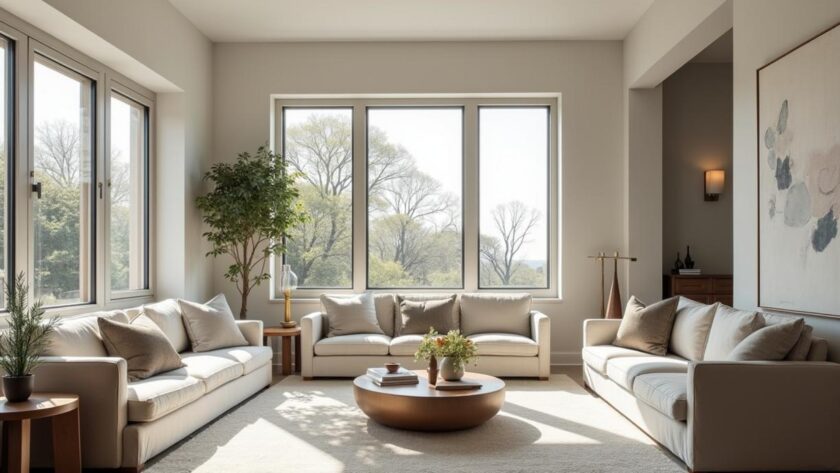
Rug sizing matters more than pattern. In a modern living space, a rug should usually sit under at least the front legs of all main seating. For many apartments, that means an 8-by-10-foot rug; larger open-plan rooms often need 9-by-12 feet to keep the seating zone from looking disconnected.
Ceiling height should also guide choices. In an 8-foot room, low-profile sofas around 30 to 34 inches high usually look better than tall, bulky seating. In rooms with 10-foot ceilings or higher, taller bookcases, vertical artwork, and floor-to-ceiling curtains help fill the volume.
Choose Materials That Age Well
Timeless interiors rely on materials that develop character without looking worn out too quickly. Solid wood, wool, linen, leather, stone, ceramic tile, and powder-coated metal usually age better than shiny laminates or very thin veneers.
The American Society of Interior Designers has reported that wellness, sustainability, and durability remain major priorities in residential design. That matters because a timeless room is not only about appearance. It should resist fading, staining, warping, and frequent replacement.
Paint finishes deserve attention. Matte walls hide surface irregularities but can scuff in high-traffic homes. Eggshell or low-sheen finishes are often better for living rooms, hallways, and family zones because they clean more easily while still looking soft.
For upholstery, look at double rub ratings. The Wyzenbeek abrasion test is commonly used in the United States; fabrics rated around 15,000 double rubs are generally acceptable for residential use, while 30,000 or more suits busy households with children, pets, or frequent guests.
Use a Restrained Base Palette
A timeless room does not have to be beige, but it benefits from a controlled foundation. Choose two or three base colors for large surfaces: walls, major upholstery, rugs, and built-ins.
Warm whites, greige, soft taupe, muted olive, charcoal, clay, and deep navy tend to outlast more saturated trend colors. Bright colors work best on movable pieces such as cushions, art, lamps, or a single accent chair.
Mix Textures, Not Clutter
Modern rooms can feel flat when every surface is smooth. Pair a linen sofa with a wool rug, a honed stone table, ribbed glass, or a matte ceramic lamp.
Texture gives depth without adding visual noise. This is especially useful in smaller spaces, where too many objects quickly reduce the sense of order.
Plan Lighting in Layers
A single ceiling light rarely creates a comfortable modern room. The Illuminating Engineering Society provides guidance on light levels, and general living spaces often function well around 100 to 300 lux, while reading or task areas need closer to 300 to 500 lux.
Use three layers: ambient lighting for overall brightness, task lighting for reading or work, and accent lighting for art, shelving, or architectural features. This lets the same room shift from morning work to evening relaxation.
Color temperature affects mood. For living spaces, 2700K to 3000K LED bulbs usually create a warm residential feel. Cooler 4000K light can work in utility areas, but it often makes lounge spaces feel clinical.
Dimming is one of the most effective upgrades. A dimmer lets you lower light levels for evening use, which also reduces glare from televisions and glossy surfaces. Quality dimmable LED bulbs and compatible switches typically start around $25 per control point.
Place floor lamps where they support actual activity. A reading lamp should place the bulb or shade bottom near shoulder height when seated, usually 42 to 48 inches from the floor depending on the chair.
Decide Which Layout Fits Your Life
The right layout depends on how the room is used most often. A beautiful plan that ignores daily habits will look staged and feel inconvenient.
| Situation | Best layout choice | Key measurement |
|---|---|---|
| Small apartment living room | Floating sofa with wall-mounted storage | Keep 30 inches clear to main doors |
| Family room with TV | Sectional facing media wall | TV center near seated eye level, about 42 inches high |
| Formal entertaining space | Two sofas or four chairs facing inward | Keep seats within 8 feet for conversation |
| Open-plan kitchen and lounge | Rug-defined seating zone | Rug should extend 6 to 12 inches beyond sofa edges |
| Work-from-home living area | Console desk behind sofa or in alcove | Desk depth of 20 to 24 inches for laptop use |
If television is the main use, prioritize sightlines over symmetry. For a 55-inch 4K TV, many viewers are comfortable at roughly 6 to 8 feet away, because higher resolution allows closer seating without visible pixelation.
If conversation matters more, avoid pushing every piece against the wall. Pulling a sofa even 6 to 12 inches forward can make the room feel more intentional and allow space for curtains, floor outlets, or a slim console.
When Built-Ins Make Sense
Built-ins suit rooms that need storage, display, and architectural structure. They are especially helpful in open-plan homes where one wall must handle media, books, and concealed clutter.
Use closed storage for the lower third and open shelves above. Shelves deeper than 12 inches often make books and objects look lost, while 10 to 12 inches is enough for most hardcovers and decorative pieces.
When Freestanding Furniture Is Better
Freestanding furniture is better for renters, growing families, and anyone likely to move within five years. It also suits older homes with uneven walls or historic trim that should not be covered.
Choose pieces with visible legs when the room is compact. Seeing more floor area creates a lighter visual effect than blocky cabinets sitting directly on the ground.
Make Storage Invisible but Accessible
Modern living creates clutter: chargers, remotes, blankets, toys, mail, exercise gear, and work equipment. Timeless design hides these items without making them hard to reach.
Closed storage should be placed near the activity it supports. Store throws near the sofa, games near the coffee table, and work supplies near the desk zone. If storage is more than 10 steps away, people are less likely to use it daily.
A media console should be at least 15 inches deep for common electronics, though some receivers need 17 inches or more including cable clearance. Check the depth before buying a narrow cabinet.
For families, baskets can work, but only when they have a defined category. One basket for blankets, one for toys, and one for pet items works better than a general “miscellaneous” bin that becomes unusable within weeks.
Add Character Without Dating the Room
Timeless does not mean anonymous. The most memorable modern rooms include personal objects, older pieces, local craft, or artwork that does not match everything else.
A good rule is to keep permanent finishes quieter and let replaceable elements carry personality. Flooring, tile, built-ins, and large sofas should be chosen with a 10- to 15-year horizon. Cushions, side tables, art prints, and lamps can change more often.
Use contrast carefully. A room with light walls, a pale sofa, a pale rug, and pale wood may look unfinished. Add blackened metal, walnut, bronze, deep green, oxblood, or charcoal in smaller amounts to create depth.
Vintage pieces are useful because they interrupt the showroom effect. One antique mirror, mid-century chair, carved stool, or old ceramic vessel can make a modern room feel collected rather than assembled in one purchase.
Respect Comfort, Air, and Sound
A room can look elegant and still fail if it echoes, overheats, or feels stiff. The U.S. Environmental Protection Agency notes that indoor pollutant levels can be two to five times higher than outdoor levels, which makes ventilation and material selection important in tightly sealed homes.
Choose low-VOC paints and adhesives where possible. Look for certifications such as GREENGUARD Gold, FloorScore, or Green Seal when selecting finishes, flooring, and furnishings.
Sound control is often overlooked. Hard floors, large windows, and flat drywall create echo. Rugs, lined curtains, upholstered seating, books, and fabric shades absorb sound and make conversation easier.
Window treatments should match the room’s exposure. South- and west-facing rooms often need solar shades or lined curtains to reduce glare and fading. The U.S. Department of Energy notes that cellular shades can reduce unwanted heat loss through windows by 40% or more when properly installed.
Comfort also comes from touch. Rounded table corners, soft arm heights, breathable fabrics, and stable side tables affect daily use more than a dramatic statement piece. A sofa seat depth of 21 to 24 inches suits many adults, while deeper seats need extra back cushions for shorter users.