 skymagazine
 Older dogs often need a slower, softer grooming routine than they did in middle age. Arthritis, thinner skin, reduced vision, dental disease, heart conditions, and anxiety can all change how a bath, nail trim, or haircut should be handled.
The goal is not just a clean coat. It is to keep the dog comfortable while preventing matting, skin infections, overgrown nails, and stress. Good dog grooming for senior dogs usually means shorter sessions, more padding, warmer water, careful handling, and closer communication with your veterinarian or groomer.
Start With Health, Mobility, and Stress Level
Before changing shampoo or clipper length, assess how your dog stands, turns, breathes, and reacts to touch. The American Veterinary Medical Association notes that dogs enter their senior years at different ages, often around 7 years for many breeds and earlier for giant breeds. That age range should prompt more frequent body checks during grooming.
Watch for panting, trembling, lip licking, sudden sitting, growling, or trying to leave the table. These are not “bad behavior” signs. They often mean pain, fear, or fatigue. If your dog cannot stand comfortably for 10 minutes, plan seated, side-lying, or floor-level grooming.
Senior dogs may also have lumps, skin tags, warts, or thin skin. Tell the groomer where these areas are before clippers touch the coat. A written note helps if your dog visits a busy salon.
When to Ask the Vet First
Call your veterinarian before grooming if your dog has open sores, sudden hair loss, a bad odor from the skin, ear discharge, coughing, fainting, or a new limp. The Merck Veterinary Manual links many skin changes in older dogs to allergies, parasites, endocrine disease, infection, or tumors. Grooming can reveal these problems, but it should not replace diagnosis.
Dogs with heart disease, collapsing trachea, seizures, or severe anxiety may need a medical plan before a salon visit. Ask whether a mobile groomer, house-call vet tech, or mild prescription medication is safer. Never give human sedatives unless your veterinarian prescribed that exact drug and dose.
Adjust Bathing for Older Skin
Senior skin often dries out faster and heals more slowly. Bathe most older dogs every 4 to 8 weeks unless your veterinarian recommends a medicated schedule. Dogs with oily skin, allergies, or infection may need baths every 1 to 2 weeks with a prescribed product.
Use lukewarm water between 90°F and 100°F. Hotter water can irritate thin skin. Colder water can make stiff dogs tense up. Place a nonslip mat in the tub, and keep water below the lower chest for dogs that feel unstable.
Choose a gentle dog shampoo with a pH designed for canine skin. Human shampoo is usually too acidic for dogs. If your dog has flaky skin, ask your vet about colloidal oatmeal, ceramide, or chlorhexidine shampoos instead of guessing.
Drying Without Overheating
Towel-dry first, pressing instead of rubbing. Friction can break fragile hair and irritate skin tags. If you use a dryer, choose low heat and keep the nozzle at least 12 inches from the coat.
Check the skin every few minutes with the back of your hand. It should feel warm, not hot. Stop if your dog pants heavily, drools, stumbles, or tries to hide.
Make Brushing and Haircuts Joint-Friendly
Brushing prevents mats that tug on skin and trap moisture. For long-coated seniors, brush problem areas every 2 to 3 days. Focus behind the ears, under the collar, armpits, belly, rear legs, and tail base. Short-coated dogs still benefit from weekly brushing because it spreads oils and reveals lumps.
Keep sessions short. Five to ten minutes is often enough for a stiff dog. Use a slicker brush gently, then a metal comb to check for snags. If the comb will not pass through, the mat is too tight for force.
Haircuts should support comfort rather than style. A 1/2-inch to 3/4-inch pet trim can reduce brushing time while still protecting the skin. Avoid shaving double-coated breeds unless a veterinarian advises it for medical reasons, because coat regrowth can become uneven.
Mat Removal Limits
Do not cut mats out with household scissors. Senior dogs often have loose skin folds that lift into the mat. Clippers with a guard or a professional dematting approach are safer.
If mats sit close to the skin, dematting should stop after 10 to 15 minutes. Longer pulling can cause bruising, pain, and brush burn. Severe matting usually calls for a short clip, even if the look is not ideal.
Support During the Groom
Use thick rubber mats, yoga mats, or padded grooming surfaces. A sling can help dogs with weak rear legs, but it should not compress the abdomen. For large dogs, floor grooming may be safer than lifting onto a table.
Let the dog sit between steps. Trim one area, then pause. Groomers can also split the appointment into two shorter visits within the same week, especially for poodles, doodles, spaniels, and heavily coated breeds.
Choose the Right Grooming Setup
The right option depends on mobility, medical risk, coat condition, and temperament. A healthy older beagle may do fine at a salon. A 14-year-old shepherd with hip pain may need home grooming or a mobile groomer.
| Option | Best fit | Avoid when |
|---|---|---|
| Home grooming | Mild stiffness, short coat, calm handling tolerance | Heavy matting, biting, painful ears, severe nail overgrowth |
| Salon groomer | Stable seniors who stand 20 to 30 minutes and tolerate noise | Heart disease, severe anxiety, collapse risk, contagious skin infection |
| Mobile groomer | Dogs stressed by travel, moderate arthritis, limited stamina | Dogs needing veterinary monitoring or sedation |
| Veterinary grooming | Medical skin disease, tumors, seizures, heavy pain, sedated care | Routine coat care without medical concerns |
A professional session for a senior dog commonly runs about $60 to $120, depending on size, coat, matting, and location. Ask whether the groomer offers senior breaks, no-kennel drying, belly bands for support, and appointment times when the salon is quiet.
Questions to Ask a Groomer
Ask how they handle dogs that cannot stand for long. Good answers include padded surfaces, rest breaks, assistant support, low-heat drying, and stopping when stress signs appear. They should also ask about medications, pain points, skin growths, and bite history.
Ask whether they follow sanitation and handling practices from groups such as the National Dog Groomers Association of America. Certification is not legally required in many places, so experience with geriatric dogs matters. A groomer should be willing to modify the haircut for health rather than insist on a breed pattern.
Nail, Paw, Ear, and Face Changes
Nails often thicken as dogs age, while activity declines. Check nails every 2 weeks. Trim small amounts, about 1/16 inch at a time, if the quick is hard to see. Nails that touch the floor while standing can change gait and add stress to arthritic joints.
Paw pads may grow dry or develop excess hair between the toes. Trim hair flush with the pads, not deeply between them. Long paw hair can make dogs slip on wood, tile, or laminate floors. Use pad balm only in a thin layer because greasy paws can slide.
Ears need gentle inspection, not deep cleaning. The American Kennel Club advises cleaning only the visible part of the ear and avoiding cotton swabs deep in the canal. Redness, odor, head shaking, or dark discharge needs veterinary care before routine grooming.
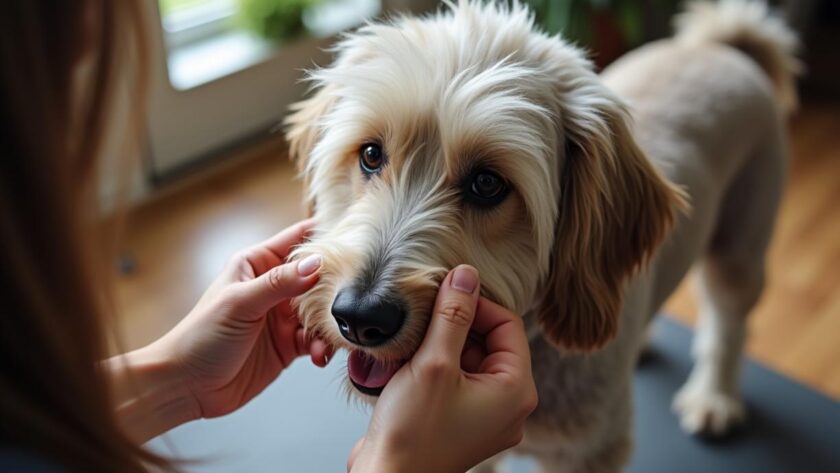
For the face, use a damp cloth instead of spraying water near cloudy eyes or sensitive ears. Trim hair around the eyes with blunt-tip shears only if the dog holds still. If vision is poor, speak before touching each area so the dog does not startle.
Build a Senior Grooming Schedule
A predictable schedule reduces stress and prevents emergency shave-downs. For most senior dogs, brush weekly or more often by coat type, check nails every 2 weeks, clean visible ear debris as needed, and bathe every 4 to 8 weeks. Dogs with medical skin conditions should follow the veterinarian’s exact bathing interval.
Keep a grooming log with dates, new lumps, sore spots, nail length, shampoo used, and behavior changes. Measure lumps with a ruler in millimeters and photograph them beside a coin. Share changes with your veterinarian if a mass grows, bleeds, changes color, or bothers the dog.
Time appointments around your dog’s best energy window. Many seniors handle grooming better in the morning, after a short walk and bathroom break. Avoid grooming right after heavy meals, because standing and bending may feel uncomfortable.
For painful dogs, coordinate grooming with prescribed pain medication timing. Many anti-inflammatory drugs work best after they reach full effect, often within 1 to 2 hours depending on the medication. Follow the label and veterinary instructions exactly.