
 staff
A collision on a Dallas-area freeway, neighborhood street, or crowded parking lot can turn an ordinary day into a series of urgent decisions. The first 72 hours are less about solving every detail immediately and more about protecting people, preserving information, and making careful choices about the vehicle. Understanding the basic stages of collision repair can make the process feel more manageable once the immediate emergency has passed.
Even a crash that appears minor can involve more than a scratched bumper or dented hood. Documentation, insurance communication, medical awareness, and a complete repair inspection each play a role in helping a driver return to the road safely.
When it is time to compare repair options, the clarity of its written process should be used to evaluate a collision repair shop, the scope of work it can perform, and the records it provides at the end of the repair.
What to Do in the First Few Minutes
Check yourself, passengers, and others for injuries before taking photos or discussing vehicle damage. Call 911 when someone is hurt, vehicles cannot be safely moved, a driver leaves the scene, or the situation creates an immediate hazard. If no one is injured and the vehicle can be moved safely, Texas guidance says drivers should move out of the flow of traffic rather than wait in an active travel lane. Moving a vehicle to a safer place can reduce the risk of another crash.
Turn on hazard lights, remain calm, and avoid arguing about fault. Exchange contact, license, registration, and insurance information, but leave the determination of responsibility to insurers and authorities.
How to Document the Crash Scene
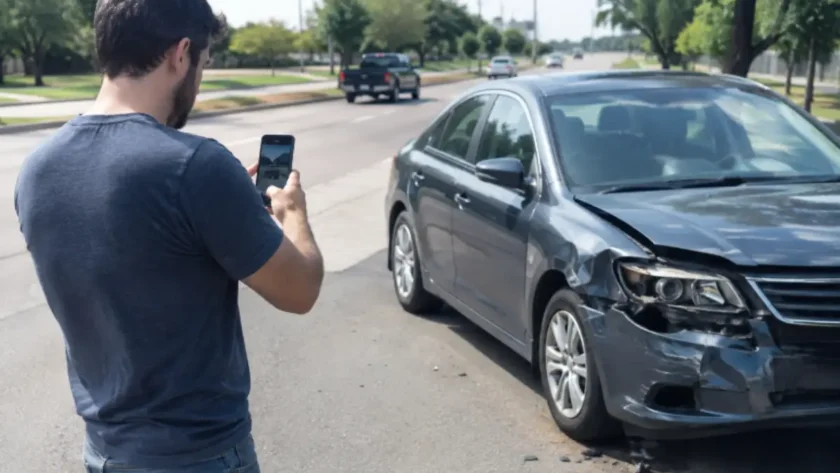
Photos and notes can help insurers, police, and repair professionals understand the condition of the vehicles before work begins. If conditions are safe, photograph all sides of each vehicle, license plates, visible damage, road markings, traffic signs, debris, weather conditions, and the vehicles’ general positions.
Write down the date, time, location, witness contact information, and a brief description of events while details are still fresh. Save images, tow receipts, police-report information, claim messages, and estimates in one digital folder. Organized records can prevent missed details during a stressful week.
Why a Medical Check May Matter After a Minor Crash
Vehicle damage does not always reflect how a person feels afterward. Some people notice soreness, headaches, dizziness, neck or back pain, numbness, or fatigue only after the initial adrenaline has worn off. Anyone with symptoms or concerns should contact an appropriate medical professional promptly. This is practical health guidance, not a diagnosis.
How to Start the Insurance Claim
Report the crash to the appropriate insurer as soon as practical and request the claim number and adjuster’s contact information. Provide requested photos, reports, witness details, and repair documents, while retaining copies for your own records. It is also useful to ask what coverages may apply, such as collision, towing, or rental coverage.
The Texas insurance claim process after a wreck notes that drivers may take a vehicle to the repair shop of their choice. An insurer may offer recommendations, but a driver should still review the repair agreement, ask questions, and understand how additional repair needs will be handled.
How to Choose a Repair Facility
A repair decision should not rest solely on the first price mentioned. Ask practical questions that reveal how the work will be managed:
- Will the estimate explain labor, parts, materials, and refinishing work?
- How will the facility communicate if newly discovered damage requires a supplement?
- Can it inspect structural, mechanical, cosmetic, and electronic concerns?
- Will replacement parts and final warranty terms be documented in writing?
- Will scan, calibration, alignment, or testing records be available when applicable?
What to Look for in a Repair Estimate
An estimate may list labor operations, replacement or repair parts, paint materials, diagnostics, scanning, measuring, towing, storage, and other related items. It may also show the deductible or costs that are not covered by the applicable policy. Review the document closely and ask for plain-language explanations of unfamiliar terms.
An initial estimate is not always the final repair amount. A bumper cover, lamp, grille, hood, or fender can conceal damage that is not visible until disassembly begins. A supplement is a revised estimate submitted when additional necessary work is identified, documented, and reviewed.
Why Hidden Damage and Safety Systems Need Extra Attention
A vehicle may start and drive after a low-speed impact while still having damage to brackets, cooling components, wiring, suspension parts, mounting points, or alignment angles. For example, an apparently small front bumper impact can affect a sensor or support behind the exterior panel. That is why a complete inspection can matter more than outward appearance alone.
Modern vehicles may also rely on cameras, radar, sensors, airbags, seat-belt pretensioners, parking aids, lane-assistance features, or forward-collision systems. Depending on the vehicle and impact, these systems may require scanning, testing, aiming, or calibration. Warning lights, a change in camera view, uneven tire wear, vibration, pulling, or an unusual steering feel should be addressed before regular driving resumes.
What to Check Before Taking the Vehicle Home
Do not rush through pickup. Use good lighting and take a few minutes to review the vehicle before leaving:
- Compare repaired panels with nearby panels for color, gaps, and alignment.
- Test doors, hood, trunk, windows, mirrors, lamps, and locks.
- Look for dashboard warning lights after starting the vehicle.
- Take a short drive, if appropriate, and note steering, braking, noises, vibration, and wind noise.
- Request the final invoice, warranty information, and any applicable scan, calibration, or alignment records.
Moving Forward After a Dallas Crash
The first 72 hours after a collision are best handled one step at a time. Protect people first, keep accurate records, communicate clearly with the insurer, and ensure the repair process addresses both visible damage and the underlying systems. A deliberate final inspection helps turn a disruptive crash into a safer return to everyday Dallas driving.